Sil Bond 4500 RTV Clear Silicone Sealant Overview
It may surprise many users, but more than 70% of professional sealant failures come from selecting the wrong silicone for the job rather than from bad application technique. As a result, having the correct product name—like RTV4500 – is crucial for users sealing metal, glass, or food-contact surfaces.
Sil Bond 4500 uses a one-component, acetoxy cure RTV chemistry engineered for strong adhesion and long-term durability in weather-exposed environments. Sold as rtv 4500 uf and as a food grade rtv silicone sealant, this product is aimed at DIY consumers and professionals across construction, marine, HVAC/R, and appliance maintenance.
On retail pages, clear cartridges in 2.8 fl. oz and 10.3 fl. oz sizes appear with favorable user reviews, while manufacturer data focuses on waterproof, UV-stable, non-yellowing adhesion to metal, glass, ceramic, tile, wood, and painted substrates. This combination of approvals, packaging, and performance makes Sil Bond 4500 a versatile choice for interior and exterior sealing tasks.
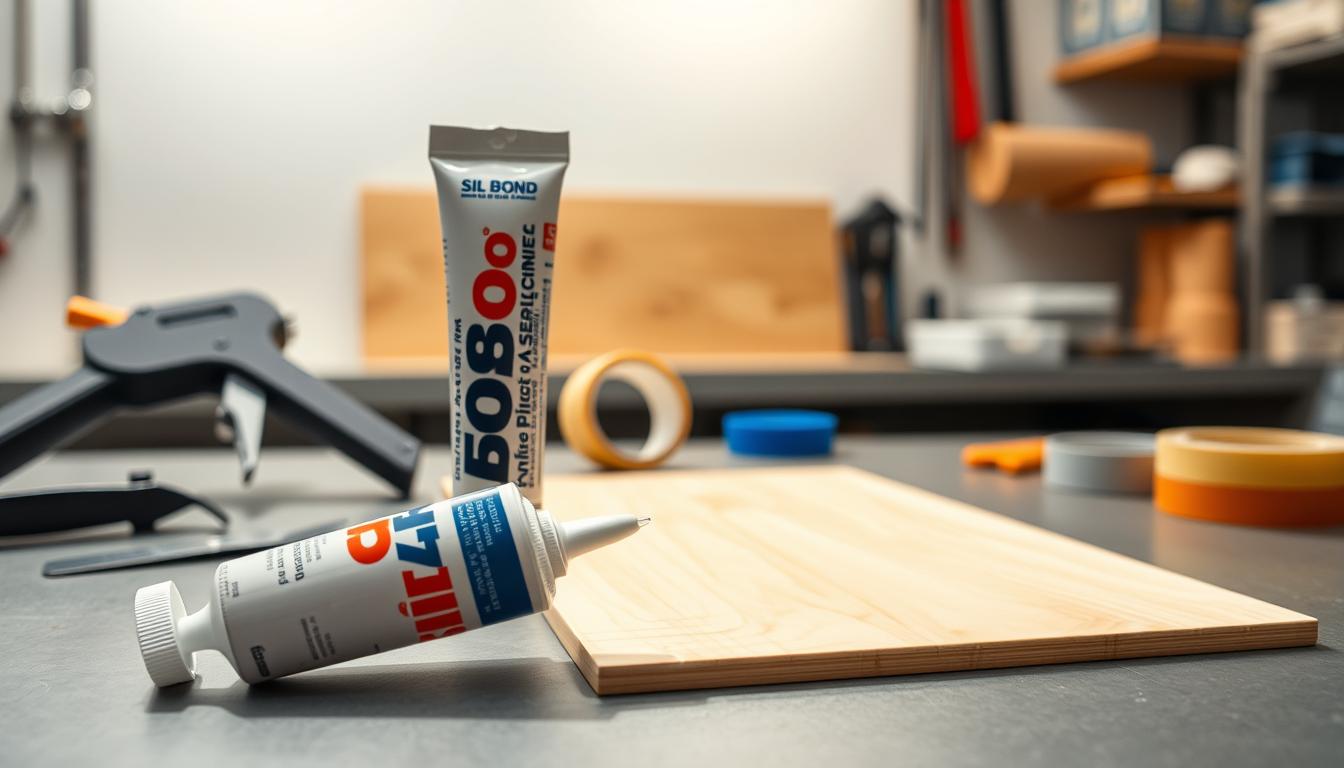
Sil Bond 4500 RTV Clear Silicone Sealant Product Overview
Sil-Bond 4500 is a single-component, acetoxy-cure RTV formulated for industrial users and professional contractors. It cures at room temperature to create a durable, waterproof joint with resistance to weather and many common chemicals. The clear formulation provides high-strength adhesion and stays VOC compliant for a wide range of construction and repair projects.
Formulated as an rtv 4500 uf family product, Sil-Bond works as both sealant and adhesive for glazing, precast concrete, HVAC/R, plumbing, and appliance trim. This product suits professional contractors, automotive technicians, marine repair facilities, and homeowners handling DIY refrigerator or countertop repairs. Retail sizes in squeeze tubes and cartridges make it easy for small jobs and touch-ups.
Manufacturers highlight non-flammable formulation and outdoor-capable water resistance as primary product benefits. In its cured state, this non-shrinking RTV offers excellent adhesion on metals, glass, ceramic materials, and painted substrates. Users rely on non-yellowing silicone properties and a UV stable silicone sealant finish to maintain clarity over the long term in both exterior and interior settings.
The formulation of Sil-Bond allows it to handle automotive sealing tasks, including oil pans and valve covers, broadening its usage in engine repair and transport maintenance. In kitchen and food-service areas, buyers should choose the line’s food-contact variants, specifically those labeled as food grade silicone sealant or food grade rtv silicone sealant, whenever rtv silicone food safe certification is needed.
Standard packaging colors include Clear, White, Black, and Aluminum, with additional custom color matching and private labeling available on request. The combination of high strength, non-shrinking RTV behavior, and weatherability positions Sil-Bond 4500 as a practical choice for contractors and service technicians seeking reliable, multiuse performance.
Sil Bond 4500 RTV Clear Silicone Sealant
Clear Silicone Sealant Sil Bond 4500 RTV is a specific acetoxy-cure product with a track record in industrial and food-service settings. Buyers and specifiers rely on the exact product labeling to match performance claims, regulatory approvals, and packaging formats before purchase.
Why the Exact Product Name Matters for Buyers and Search
Using the full product name helps confirm technical data and approvals. Sil-Bond RTV 4500 name accuracy is especially important when listings mention FDA CFR 177.2600 or NSF 51 because matching those labels lowers risk in purchasing.
Commercial buyers look for SKU accuracy and part numbers on distributor pages. Exact product naming speeds up approvals, improves inventory control, and simplifies quality audits for rtv 4500 uf uses and food-contact projects.
Available Packaging Sizes and Colors
Clear Sil-Bond packaging comes in several formats for different jobs. At retail, typical sizes include 2.8 fl oz squeeze tubes and 10.3 oz clear cartridges used for everyday sealing tasks.
Manufacturers list core colors including Clear, White, Black, and Aluminum. Custom tones like Almond and Bronze are available for larger orders and private labeling needs.
Where to Purchase Sil Bond 4500 in the United States
U.S. buyers can obtain Sil-Bond 4500 USA via several purchasing paths. Online marketplaces provide retail listings and ASIN-style entries for smaller purchases, whereas industrial distributors use SKU-based ordering for bulk requirements.
Food grade silicone sealant US retailers include specialty gasket suppliers, HVAC and plumbing distributors, marine suppliers, and direct manufacturer sales. Search listings carefully to confirm FDA-grade or FDA-RTV-2.8oz-cl labeling before checkout.
Technical Specifications and Standards Sil Bond 4500 Meets
Sil Bond 4500 meets a broad set of industry standards used by contractors and specifiers. The technical profile supports elastic sealing, long-term weather resistance, and use in regulated projects when product instructions are followed.
Standards: ASTM, Military, and Federal
Sil Bond 4500 specifications reference ASTM C920 Type S, Grade NS, Class 25, TT-S-00230C, TT-S-01543A, and MIL-A-46106A. These references indicate that the compound satisfies performance thresholds for movement capability, adhesion, and environmental exposure required in many building and military installations.
Approvals for Food Contact and Sanitation
The formulation is noted as having FDA CFR 177.2600 silicone acceptance, USDA clearance, and NSF 51 silicone approval for applications involving food equipment and surfaces. FDA CFR 177.2600 silicone designation means the elastomer base is permitted for certain food-contact conditions when cured and used per manufacturer guidance.
NSF 51 silicone approval concerns materials and finishes used in food equipment. Those needing food grade rtv silicone sealant must check the exact end-use conditions, curing schedule, and cleaning procedures to ensure compliance with regulatory boundaries.
VOC and green building relevance
In distributor and manufacturer materials, Sil Bond 4500 is described as VOC compliant silicone and rtv silicone low VOC. That characteristic makes Sil Bond 4500 suitable for projects pursuing LEED or other environmental benchmarks that favor green building silicone sealant options.
VOC compliance reduces on-site emissions during installation and helps meet indoor air quality requirements. When specs or local regulations demand low-emitting materials, make sure to specify VOC compliant silicone.
Practical notes for specifiers
- Confirm product lot documentation for ASTM C920 and MIL-A-46106A compliance on procurement paperwork.
- Request written confirmation for FDA CFR 177.2600 silicone and NSF 51 silicone approval that matches your intended food-contact scenarios.
- Verify VOC levels and product data sheets before referencing green building silicone sealant or rtv silicone low VOC in contract documents.
Cure Type, Chemistry, and Performance Characteristics
Sil-Bond 4500 uses an acetoxy cure RTV chemistry that crosslinks at normal room temperatures. This room temperature vulcanizing silicone is a single-component system that releases a small amount of acetic acid while curing. The single-part format simplifies application on job sites and in factories while offering predictable skin-over and tack-free times.
The rtv 4500 uf chemistry in Sil-Bond balances flow and short-term grab so installers can tool joints cleanly. Users should note acetoxy cure RTV can interact with sensitive metals like copper or zinc and may affect some nitrocellulose-type paints. For most construction and industrial applications, the formulation bonds effectively to common substrates when proper surface preparation is completed.
Performance After Cure delivers reliable sealing and protection. As a waterproof silicone sealant, Sil-Bond forms airtight, weatherproof joints that resist water infiltration on glazing, roofing, and marine cabins. After cure, the elastomer is sold as UV stable silicone and non-yellowing RTV, preserving look and service life in outdoor conditions.
Strong adhesion is one of the key selling points. It acts as a high strength silicone adhesive that bonds well to metal, glass, tile, fiberglass, ceramic, painted surfaces, wood, and stone. Manufacturers report durable adhesion on trim, appliance parts, and engine assemblies where vibration and thermal cycling are common.
For long-term seals, dimensional stability is critical. Sil-Bond is described as non-shrinking RTV silicone that preserves joint thickness and gap-filling ability during cure and after full polymerization. Such behavior reduces stress on the bonded substrates and helps keep seals watertight under movement.
| Characteristic | Practical Benefit for Users | Relevant Keyword |
|---|---|---|
| Cure Chemistry Type | Single-component acetoxy system curing at ambient temperature with predictable work time | acetoxy cure RTV silicone |
| Application Environment Range | Simple field use for glazing, roofing, marine, and appliances | RTV silicone for room temperature vulcanizing |
| Formulation Balance | Good tooling, moderate sag resistance, controlled flow for finish work | rtv 4500 uf chemistry |
| Resistance to Water | Forms airtight, watertight seals that block moisture and steam | waterproof silicone sealant |
| Outdoor Durability | Maintains clarity and mechanical properties after prolonged UV exposure | UV stable silicone sealant |
| Appearance Retention | Resists discoloration, preserving long-term visual match | non-yellowing RTV silicone |
| Bonding Strength Level | High peel and shear resistance for load-bearing joints | high strength silicone adhesive |
| Dimensional Behavior on Cure | Minimal shrinkage preserves seal geometry and helps avoid gaps | non-shrinking RTV |
Common Applications of Sil Bond 4500 RTV
The Sil Bond 4500 line suits a wide range of trades and repairs. Its chemistry and approvals make it a practical option for projects requiring durable, weatherproof seals. The following sections outline typical use cases and explain why Sil Bond 4500 is selected for them.
Construction Applications: Sealing, Glazing, Precast Concrete
Typical construction projects with Sil Bond 4500 involve perimeter joints, window frames, and curtainwall glazing beads. As a sealing glazing RTV, it fills movement joints and bonds to common substrates with minimal shrinkage.
Precast concrete sealant applications gain from its flexibility and lasting adhesion. Builders employ it above grade for weatherproofing and for interior joints where a reliable, non-brittle seal is needed.
Applications in Marine, Transportation, and HVAC/R
Marine cabins and exterior fittings take advantage of a marine silicone sealant that resists salt spray and moisture. The product’s resistance to environmental exposure promotes long life in harsh operating conditions.
For buses, railcars, and specialty trailers, vehicle builders and repair techs use it as a transportation sealant where vibration and movement demand resilient joints. In HVAC/R silicone installations, airtight, waterproof seals are used around ducts, units, and equipment to preserve system efficiency.
Appliance, Kitchen & Bath, Countertop, and Sanitary Seals
Appliance RTV silicone is frequently used for trim, refrigeration components, and gasket repairs. Retail listings often market the product for appliance and refrigeration maintenance because of its adhesion to metal and plastics.
In kitchens and bathrooms it serves as a kitchen & bath sealant for countertops, sinks, and backsplash joints. As sanitary seals silicone, it is used in food-adjacent zones where FDA and NSF approvals allow limited contact, enabling deployment in commercial kitchens and food-service equipment following instructions.
Compatibility with Common Materials and Surfaces
Sil-Bond 4500 shows broad compatibility across common building and industrial substrates. When surfaces are prepared correctly, it produces durable seals for metal, glass, stone, wood, and engineered panels. Small gaps and joints benefit from its non-shrinking cure and long-term UV stability.
Adhesion to Metal, Aluminum, Steel, and Painted Surfaces
Sil-Bond delivers strong adhesion to aluminum and steel when surfaces are clean and dry. In engine jobs such as sealing valve covers and oil pans, it provides a dependable bond resistant to oil and vibration. Acetoxy cure formulas can react with some metals or coatings, so follow manufacturer guidance and use a primer when needed to protect finishes.
Bonding to glass, ceramic, tile, marble, and stone
The formula performs well on glazed surfaces, making it a practical glass silicone sealant for glazing and perimeter joints. It also bonds effectively to ceramic and porcelain tile, serving as an effective tile and ceramic silicone for grout joints. For marble and other light-colored stone, the non-yellowing nature of the sealant preserves appearance and makes it suitable as a marble sealant on countertops and decorative trims.
How It Performs on Wood, Plywood, Fiberglass, and Other Substrates
Sil-Bond lists adhesion to wood and plywood and can fill gaps without shrinking, which benefits panel joints and trim details. It also bonds to fiberglass, serving as a fiberglass sealant in marine and transportation applications. For wood-related silicone work, clean surfaces thoroughly and perform a test on finished or painted plywood before proceeding with the entire job.
| Substrate Type | Typical Application | Usage Notes |
|---|---|---|
| Aluminum | Fabrication joints and engine seams | Provides a good bond; primer recommended if anodized or painted |
| Steel | Panel seams and metal-to-metal seals | Strong adhesion; clean oil and rust before applying |
| Painted Surfaces | Trim sealing and bonding to painted surfaces | Compatibility depends on coating; full cure may stress some paints |
| Glass | Window glazing, sightlines | Excellent clarity; suitable as glass silicone sealant for joints |
| Ceramic / Tile | Countertop perimeters, shower seams | Serves as tile and ceramic silicone; resists moisture and mildew |
| Marble / Stone | Countertops, decorative insets | Non-yellowing; recommended as marble sealant with test patch |
| Wood / Plywood | Trim joints and panel gaps | Plywood silicone adhesive suitable for many applications; test on finished wood |
| Fiberglass | Boat fittings and RV panels | Reliable fiberglass sealant; verify lamination is fully cured |
Surface preparation strongly influences performance. Remove oils, dust, and mildew, then dry the area thoroughly before application. Running a small test patch helps verify adhesion on sensitive or specialty-coated substrates.
Food Safety, Certifications, and Use Near Food
Sil-Bond 4500 holds specific approvals that dictate where and how it may be used around food. Labels and manufacturer literature list FDA CFR 177.2600 silicone meaning and NSF 51 approval silicone for many batches. These approvals clarify permitted ingredients and conditions of use for food equipment and related surfaces.
Knowing what the approvals mean assists buyers in determining if the sealant is truly food grade rtv silicone. Under FDA CFR 177.2600 silicone meaning, certain silicone rubbers are permitted for food contact if they are formulated and cured according to regulation limits. A product labeled NSF 51 approval silicone has passed standards for materials used in food equipment construction.
Whether rtv silicone is food safe depends on the application and the cure conditions. With correct curing, Sil-Bond satisfies the manufacturer’s statements that designate Sil Bond food safe for certain conditions. Users should confirm that curing time, thickness, and service temperature match the conditions cited by the approvals.
The following table outlines common approved and non-approved use cases to assist with compliant selection.
| Use Category | Example Applications | Approval Status |
|---|---|---|
| Direct Food Contact (Short-Term) | Utensils, food-processing surfaces that touch food directly | Requires explicit manufacturer confirmation beyond FDA CFR 177.2600; consult MSDS and technical data sheets |
| Food-contact equipment parts | Appliance trim, refrigerator repair, sealing joints on food equipment | Often acceptable when product lists NSF 51 approval silicone and follows instructions |
| Indirect Contact or Splash Zones | Gaskets, behind-panel seals, and sanitary joints | Common applications for food grade rtv silicone sealant when cured according to guidance |
| Non-food-contact silicone | Engine sealing, roofing, marine cabins, structural glazing | Allowed without food-contact approvals; use manufacturer’s general-purpose grade |
Manufacturers frequently list food contact silicone sealant uses such as appliance trim, refrigeration seals, and sanitary joints in kitchen areas. Such uses rely on documented FDA CFR 177.2600 silicone meaning and NSF 51 approval silicone compliance when the sealant is applied as directed.
Those asking “rtv silicone food safe?” need to check for “FDA Grade” claims on labels and read both the MSDS and technical data sheet. Always confirm the approval scope before using the sealant on utensils or surfaces that see extended direct contact with food.
Practical advice: when an application borders on direct food contact, contact the manufacturer to verify Sil Bond food safe status for that specific use. For clear differentiation, reserve certified food grade rtv silicone sealant for food-contact areas and non-food contact silicone for mechanical or exterior jobs.
Application Guidance and Best Practices for Sil Bond 4500
Good preparation makes reliable seals. Follow straightforward surface prep silicone sealant steps to remove oil, grease, paint residue, and loose material. On metal, glass, and ceramic, pre-cleaning with isopropyl alcohol or a recommended solvent before applying the sealant improves adhesion. When extra grip is needed, select a primer for silicone that the technical data sheet specifies.
Consistent results depend on using the right dispenser. For cartridges, a quality caulk gun provides an even, controlled flow. Squeeze tubes suit small repairs. When you apply silicone sealant, lay a continuous bead sized to the joint. Tool the bead during its tacky phase to achieve a neat finish and improve bond strength. For aesthetic or functional joints, spend time smoothing the silicone bead with a wet spatula or a gloved finger.
Achieve airtight silicone application by avoiding gaps and contaminants. Tooling within the product’s skin time helps lock in adhesion and creates a tight seal. For moving substrates, use recommended joint widths and backup materials so the material stretches without detaching. Keep silicone-lubricated materials away from the joint during cure to prevent adhesion loss.
Be prepared for varying cure rates. For acetoxy room temperature vulcanizing silicones, typical RTV cure time gives a tack-free skin in minutes up to a few hours. Full strength silicone cure usually takes 24 to 72 hours and depends on bead size, humidity, and temperature. In critical situations, always consult the Sil-Bond technical data sheet to confirm cure times and recommended handling and service intervals.
For automotive or engine work, degrease surfaces thoroughly before applying silicone sealant. Use manufacturer-approved primers for problematic substrates and follow torque, clamping, and assembly guidance when rejoining parts. Proper cleaning before sealant and correct cure conditions reduce the risk of bond failure and leakage.
If you need faster turnaround, control environment factors. Higher humidity and warmer temperatures speed RTV cure time. Thicker beads extend the time to full strength silicone cure; plan service intervals accordingly. Keep an MSDS and technical data sheet on hand to match job timing with the sealant’s rated performance.
Durability, Weatherability, and Long-Term Performance
Sil-Bond 4500 is formulated for outdoor environments where sunlight, rain, and seasonal temperature swings put stress on sealants. The manufacturer lists UV stability and excellent weatherability as core traits, making this exterior silicone suitable for glazing, marine trim, and building joints that need lasting protection.
UV and Weather Resistance for Exterior Applications
When exposed to sunlight, a UV stable silicone resists surface breakdown and loss of flexibility. It is promoted as a weather resistant silicone sealant that maintains bonds on exposed facades and window edges. Contractors choose it for clear seal lines on glass where visual clarity matters and yellowing would be obvious.
Temperature Range and Long-Term Adhesion Performance
Silicone sealants cure at room temperature and retain elasticity across a wide temperature range. For exact silicone temperature range limits, consult the technical data sheet before starting critical projects. The formula is marketed as a long-term adhesion silicone with non-shrinking behavior, giving durable seals on metal, glass, and painted substrates in mechanical and building applications.
Non-yellowing and aging behavior in real-world use
Claims of non-yellowing silicone sealant indicate resistance to UV-caused discoloration through extended exposure. Aging silicone performance depends on the compound chemistry and on proper application. For clear or light-colored joints, the non-yellowing feature keeps appearance stable and resists cracking and bond loss.
For best long-term results clean and prime surfaces per the technical data sheet. This approach allows the weather resistant silicone sealant to meet exterior service expectations and ensures the long-term adhesion silicone continues to perform properly.
Safety, Handling, and Material Safety Data Highlights
Sil-Bond 4500 is described as a non-flammable silicone using a VOC compliant RTV formula. Read labels and verify claims for your project and local codes before use. Product pages typically offer both the RTV 4500 technical data sheet and Sil-Bond MSDS for full details.
Non-flammable properties and VOC considerations
According to manufacturers, this product is classified as non-flammable. That reduces fire risk during storage and handling on site. Low VOC silicone is often chosen by buyers when indoor air quality and green building certifications are important.
VOC compliant RTV materials help meet state and local limits. Always confirm VOC content on the RTV 4500 technical data sheet and compare it with project specifications.
Basic safe handling, storage, and disposal notes
Practice safe handling RTV procedures by wearing nitrile gloves and suitable eye protection. Avoid skin and eye contact and use local exhaust or natural ventilation during application whenever possible.
Keep cartridges and tubs in a cool, dry storage area, ensuring lids remain closed. Proper silicone storage reduces contamination and extends shelf life.
To dispose silicone sealant, follow all local waste regulations and landfill guidelines. Cured silicone is usually inert, while uncured material may need special handling. When in doubt, contact your local hazardous waste authority.
Where to find full Material Safety Data Sheets (MSDS)
Acquire the Sil-Bond SDS and Sil-Bond MSDS prior to purchase and before starting work. Manufacturers and authorized distributors usually host the full documents on their websites.
The Sil-Bond SDS and RTV 4500 technical data sheet list first-aid measures, respiratory recommendations, and cleanup steps. Keep copies on site for crew reference and emergency response.
| Topic | Key Point | Document to Consult |
|---|---|---|
| Flammability | Non-flammable silicone reduces fire hazard | Sil-Bond SDS |
| VOC | Low VOC silicone options support better indoor air quality | RTV 4500 technical data sheet |
| Personal Protection | Gloves, eye protection, ventilation recommended | Sil-Bond MSDS |
| Storage | Keep cool, dry, sealed; follow silicone storage guidance | Sil-Bond SDS |
| Disposal | Dispose silicone sealant under local regulations; cured sealant is typically inert | Sil-Bond MSDS |
| Curing byproduct | Acetoxy cure may emit acetic acid; ventilate during cure | RTV 4500 technical data sheet |
Comparisons: Sil Bond 4500 vs Other RTV 4500 UF and Food Grade Sealants
Choosing between Sil-Bond 4500 and competing formulations starts with a few clear checkpoints. Review cure chemistry, certifications, VOC content, and stated adhesion. A direct rtv 4500 uf comparison reveals that cure type affects odor, substrate compatibility, and primer needs.
Performance differences
Sil-Bond is an acetoxy cure RTV that lists high strength, UV stability, and VOC compliance. Some competing RTV 4500 UF formulations rely on neutral cure chemistries. That choice alters RTV performance differences, including cure odor, metal corrosion risk, and compatibility with coatings.
Food-contact and approvals
In kitchen and food plant contexts, review FDA and NSF wording closely. A food grade silicone sealant comparison should verify whether approval covers incidental contact or prolonged contact. Sil-Bond FDA silicone vs others often looks similar on paper, but the exact FDA/NSF statements and technical data sheets clarify allowed uses.
Packaging Options and Price Points
Perceived value often shifts with different packaging sizes. Sil-Bond appears in retail listings as both small tubes and larger cartridge formats. Sil-Bond pricing examples sometimes show a 2.8 fl. oz tube around $23.99 and 10.3 oz options near $33.49 in certain channels. Distributor offers may show promotional SKUs with significantly lower unit rates.
Evaluating Cost and Value Metrics
Compare rtv silicone cost per oz to judge silicone sealant value. Calculate rtv silicone cost per oz using retail and distributor prices, then weigh approvals, technical support, and private-label opportunities. A low unit cost can be outweighed by missing FDA/NSF text or poor adhesion on your substrate.
Buyer checklist
- Confirm cure type and substrate compatibility before testing.
- Ensure FDA/NSF claims align with your intended food-contact usage.
- Compare VOC levels and review material safety data sheets.
- Compute rtv silicone cost per oz and factor in yield for your specific application.
- Request manufacturer TDS and look for non-yellowing and UV claims.
When you conduct a Sil-Bond vs RTV 4500 UF assessment, gather sample parts and test adhesion, cure time, and long-term appearance. That hands-on check often highlights practical RTV performance differences that specs alone cannot show.
Customization, Buyer Tips, and Commercial Services
When you decide to buy Sil-Bond 4500, start by requesting technical data sheets, SDS, and specification sheets from the supplier. Check that the acetoxy cure type is compatible with your substrates and verify FDA CFR 177.2600 and NSF 51 certifications if your application requires food grade rtv silicone sealant for direct or incidental contact.
Some manufacturers and distributors offer private labeling silicone and custom color silicone sealant capabilities. Standard colors include Clear, White, Black, and Aluminum, while custom shades like Almond and Bronze are available on request. Obtain sample tubes to evaluate adhesion and cure performance on your own substrates before committing to large orders.
Compare packaging sizes such as 2.8 fl. oz tubes, 10.3 oz cartridges, and bulk options to balance cost and waste. For commercial procurement, include relevant standards and SKUs (ASTM C920, MIL-A-46106A, TT-S specifications) in purchase orders to meet contract requirements and warranty conditions. Distributors often provide warranty and support details, which is useful when using the sealant for automotive or engine applications.
Finally, weigh private labeling silicone and volume discounts against lead times for color matching and packaging customization. Maintaining clear communication with the manufacturer on sample timing, minimum order quantities, and technical guarantees helps streamline procurement and ensures the product satisfies performance and regulatory requirements.
FAQ
What Is Sil-Bond (RTV 4500) and What Are Its Basic Properties?
Sil-Bond (RTV 4500) is a one-component, room temperature vulcanizing (RTV) acetoxy-cure silicone sealant and adhesive formulated for high-strength adhesion. It is VOC-compliant, non-flammable, water-resistant, UV stable, non-yellowing, and non-shrinking. The product bonds to a wide range of substrates and is supplied in squeeze tubes, cartridges, and larger industrial containers.
What are the primary uses and who typically uses Sil-Bond RTV 4500?
The sealant is positioned for both DIY consumers and professionals. Typical users include homeowners, building contractors, marine and transportation technicians, HVAC/R and plumbing professionals, appliance repair technicians, and automotive mechanics. Common applications are sealing and glazing, precast concrete joints, marine cabins, engine and automotive seals (oil pans, valve covers), appliance trim, countertops, and sanitary seals in kitchens and baths.
Which Key Features Are Highlighted for Sil-Bond RTV 4500?
The manufacturer lists excellent adhesion, waterproof and airtight performance, high strength, non-shrinking properties, UV stability, non-yellowing finish, VOC compliance for green building standards, and all-weather durability as key features. The product is also offered in multiple colors with private-label and color-matching options.
Why Does the Exact Product Name Matter When Buying Sil-Bond RTV 4500?
The exact product name (Sil-Bond (RTV 4500)) and correct SKUs are important because approvals, cure type, and performance claims are associated with particular formulations. Approvals from FDA, NSF, ASTM, MIL, and others referenced by sellers typically apply to specific SKUs and corresponding technical data sheets. Matching the name and SKU helps ensure you receive the stated certifications and the intended cure chemistry (such as acetoxy vs neutral cure).
Which Packaging Sizes and Color Options Does Sil-Bond Offer?
Retail and distributor listings show small squeeze tubes (example 2.8 fl. oz / 82.8 mL) and larger cartridges (example 10.3 fl. oz) as typical consumer sizes. Industrial packaging and bulk containers are available for commercial buyers. Standard colors include Clear, White, Black, and Aluminum, with custom colors (Almond, Bronze) and private-label options offered by the manufacturer.
Where Is Sil-Bond RTV 4500 Sold in the U.S.?
You can buy Sil-Bond via online marketplaces, specialty appliance and gasket retailers, industrial and marine distributors, HVAC and plumbing suppliers, and direct manufacturer or distributor sales. SKU-based distributor pages and marketplace listings are common procurement routes for single tubes or bulk orders.
What Technical Standards Does Sil-Bond RTV 4500 Comply With?
Sil-Bond (RTV 4500) is listed as meeting ASTM C920 Type S, Grade NS, Class 25; TT-S-00230C; TT-S-01543A; and MIL-A-46106A. These standards relate to elasticity, weather resistance, and required performance for construction and industrial sealant use.
Does Sil-Bond meet FDA, USDA, or NSF standards for food-contact use?
The product documentation indicates compliance with FDA CFR 177.2600, USDA approval, and NSF 51. These approvals support use in certain food-equipment and incidental food-contact applications when the product is used according to manufacturer instructions and the conditions of the approvals.
Is Sil-Bond VOC compliant and suitable for green building projects?
Yes. The formulation is described as VOC-compliant and promoted for all-weather performance that aligns with Green Building Standards, making it suitable for projects requiring low-VOC materials for indoor air quality or LEED-type certifications.
How Does Acetoxy Cure RTV Work and How Does Sil-Bond Cure?
An acetoxy cure RTV is a one-part silicone that crosslinks at room temperature and emits acetic acid, which has a vinegar-like smell. Sil-Bond is an acetoxy RTV; it develops a skin and begins curing at ambient conditions, with full cure depending on bead size, humidity, and temperature. For exact information on cure rates, users should consult the technical data sheet.
How Does Sil-Bond RTV 4500 Perform Once Cured?
Once fully cured, Sil-Bond creates waterproof and airtight seals with UV stability and resistance to yellowing. It remains flexible, offers long-term weatherability, and maintains adhesion and dimensional stability (non-shrinking) in a broad range of exterior and interior applications.
Does Sil-Bond Shrink and How Strong Is Its Adhesion?
The sealant is formulated to deliver high-strength adhesion to many substrates including metals, glass, stone, tile, wood, fiberglass, and painted surfaces. Being non-shrinking, it helps maintain seal integrity and bond strength throughout service life.
What Construction Applications Is Sil-Bond Commonly Used For?
In construction, Sil-Bond is commonly used for sealing and glazing joints, sealing precast concrete, perimeter and above-grade sealing, roofing details, and exterior trim. Its UV stability and strong weatherability make it suitable for exterior glazing and long-term exposure conditions.
What Role Does Sil-Bond Play in Marine, Transportation, and HVAC/R Work?
The product is specified for marine cabins, transportation seals, and HVAC/R equipment sealing where waterproof, airtight, and durable seals are required. Because it resists moisture, UV, and temperature cycling, it is well suited to boat cabins, vehicle structures, and HVAC ducts and unit penetrations.
Can Sil-Bond Be Used for Appliance, Kitchen & Bath, Countertops, and Sanitary Seals?
Yes. Retail listings and manufacturer guidance list appliance trim, refrigerator repairs, countertops, and sanitary seals as recommended uses, especially where NSF 51 and FDA CFR 177.2600 approvals apply to food-equipment contacts or incidental food contact.
Does Sil-Bond Adhere to Metal, Aluminum, Steel, and Painted Substrates?
Sil-Bond shows good adhesion on aluminum, steel, and many painted surfaces. However, acetoxy cure silicones may react with some sensitive metals or interfere with certain coatings. Surface testing, cleaning, and primers may be necessary for optimal long-term adhesion on problematic substrates.
Can Sil-Bond Be Used on Glass, Ceramic, Tile, Marble, and Stone?
Yes. The sealant provides strong adhesion to glass, ceramic, tile, marble, and stone and is commonly used for glazing, tile perimeter seals, and countertop joints where non-yellowing and clarity are important.
What Is Sil-Bond’s Performance on Wood, Plywood, and Fiberglass?
Sil-Bond bonds to wood, plywood, and fiberglass, and its non-shrinking, flexible cured state accommodates movement in these substrates. Proper surface preparation improves adhesion and extends service life.
How Do FDA CFR 177.2600 and NSF 51 Affect Food-Contact Use?
FDA CFR 177.2600 governs silicone rubber materials permitted for food contact under defined conditions, while NSF 51 covers materials and finishes used in food equipment. While these approvals show the formulation meets regulatory criteria for particular food-equipment uses, they do not automatically allow all direct-food-contact applications. Overall compliance hinges on cure conditions, coating thickness, and end-use parameters specified in the relevant standards.
Is RTV silicone food safe and is Sil-Bond considered food grade?
Many RTV silicones that meet FDA CFR 177.2600 and NSF 51 can be considered food-grade for certain applications. Retail listings often describe Sil-Bond as FDA-grade / FDA-RTV, while the manufacturer notes FDA CFR 177.2600, USDA, and NSF 51 approvals. Before use, buyers should consult the manufacturer’s TDS/MSDS and confirm whether the intended food-contact situation is incidental or long-term direct contact.
What food-contact uses are recommended and which are not advised?
Manufacturers typically recommend use on food-equipment components and incidental contact areas in appliances and refrigeration when approvals are valid. Prolonged direct contact with food, such as on utensils or cutting surfaces, may be more restricted; always check the technical data and relevant regulations to confirm whether such uses are allowed.
What Surface Preparation Is Needed Before Applying Sil-Bond?
Surfaces must be clean, dry, and free of oil, grease, dust, and loose material. Degreasing is especially important for engine and automotive applications. For difficult substrates, follow manufacturer guidance on primers or adhesion promoters for best results.
What application techniques produce smooth, airtight, waterproof seals?
Lay down a continuous bead matched to the joint width, tool during skin time for a uniform finish, and keep silicone lubricants away from the joint. For cartridges, use a caulk gun; rely on squeeze tubes for minor repairs. Tooling with a spatula or gloved finger produces a smooth joint and improves contact with the substrate.
How Long Does Sil-Bond Take to Cure and Reach Full Strength?
Exact cure times depend on bead thickness, ambient temperature, and humidity. Most acetoxy RTVs skin over in minutes to hours and approach full cure between 24 and 72 hours. Consult the manufacturer’s technical data sheet for precise cure schedules under different conditions.
Does Sil-Bond resist UV exposure and long-term weathering?
Yes. The product is formulated for excellent weatherability, UV stability, and non-yellowing behavior, making it suitable for extended exterior exposure and applications where aesthetic permanence is expected.
How Does Sil-Bond Perform Over Temperature Ranges and Long-Term Adhesion?
The sources provided do not list exact service temperature ranges. Sil-Bond is marketed for durable adhesion and weather resistance, but buyers should review the technical data sheet for specific high- and low-temperature service limits relevant to their application.
Does Sil-Bond Stay Non-Yellowing as It Ages?
Documentation describes the product as non-yellowing and UV stable, helping maintain clarity and color on light-colored or transparent joints indoors and outdoors.
Is Sil-Bond flammable and what are the VOC considerations?
Sil-Bond is described as a non-flammable, VOC-compliant product. VOC compliance is highlighted as important for green building projects and indoor air quality. Users should always cross-check VOC claims with local regulations and the official technical data.
Which Safety, Storage, and Disposal Steps Are Recommended?
Store the product in a cool, dry place and keep containers tightly sealed. Avoid skin and eye contact and use adequate ventilation during cure because acetoxy cure chemistry releases acetic acid byproduct. Follow local regulations when disposing of unused sealant and empty packaging. Obtain the SDS/TDS for full safety instructions before use.
Where Are Full MSDS and Technical Data Sheets Available?
Manufacturer and authorized distributor web pages provide the Safety Data Sheet (SDS/MSDS) and Technical Data Sheet (TDS). Request these documents from your supplier or download them from official product pages before purchase or use.
How does Sil-Bond RTV 4500 compare to other RTV 4500 UF or food-grade silicones?
Differences between products include cure chemistry (acetoxy vs neutral), scope of FDA/NSF approvals, VOC levels, adhesion characteristics, cure rates, and color/UV stability. With its ASTM/MIL specifications and FDA CFR 177.2600 plus NSF 51 approvals, Sil-Bond is positioned as a flexible industrial and food-equipment-compatible sealant; however, always check the TDS, SDS, and exact approvals for each SKU.
How do price and packaging compare among sellers?
Retail listings show small tubes at higher per-milliliter prices (examples near $23.99 for 2.8 fl. oz) and larger tubes or distributor SKUs with lower per-unit costs. Actual pricing depends on seller, chosen packaging size, and whether you are buying private label or bulk quantities. Consider unit cost, approvals, and sample testing when evaluating value.
What Buyer Tips Should I Follow When Procuring Sil-Bond RTV 4500?
Verify the exact product name and SKU, request the TDS and SDS, confirm FDA/NSF approval details for the intended food-contact use, test adhesion on your substrates, compare tube vs cartridge sizes to reduce waste, and request samples for compatibility testing. For commercial orders, use the manufacturer’s specifications (ASTM, MIL, TT-S) to ensure contract compliance.